
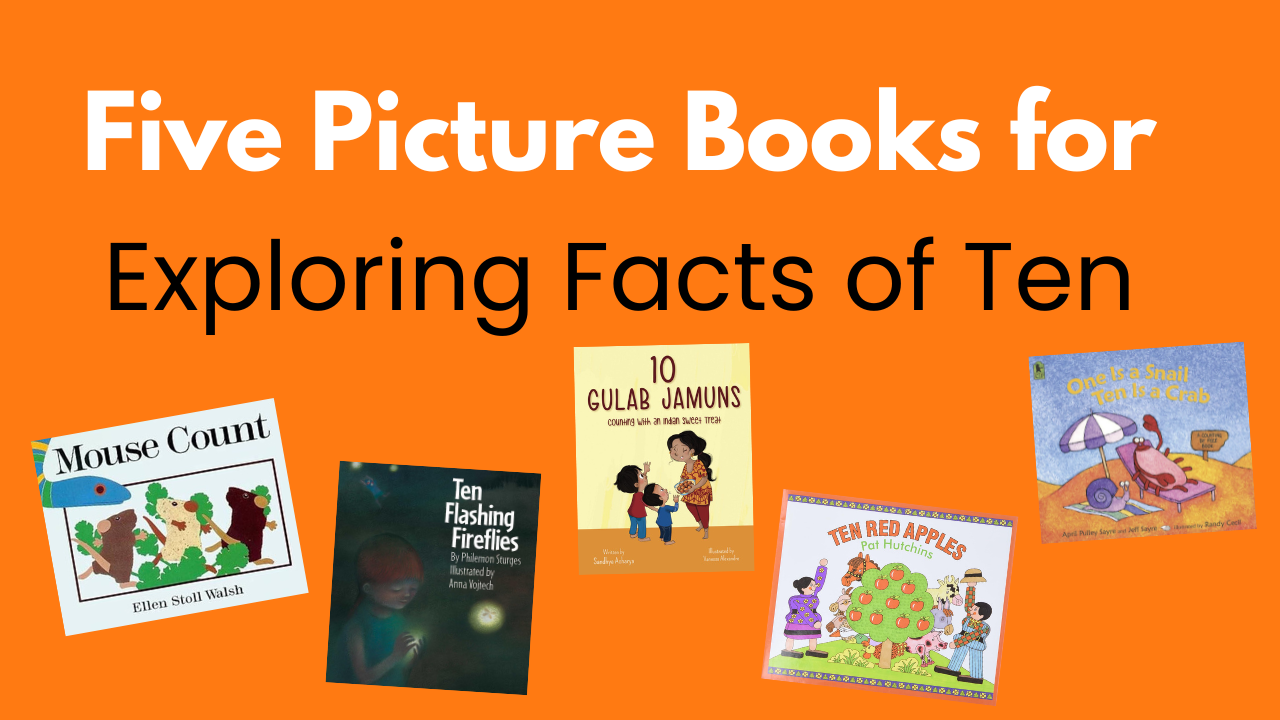
5 Picture Books for Exploring Facts of 10 (Plus Activities to Try After Reading)
* This post contains affiliate links. As an Amazon Associate, Mathometry earns a small commission from qualifying purchases. Know that we only link to products that we personally use and recommend.
Knowing the combinations that make 10 is an important fluency milestone in the early grades. Kindergarteners are expected to find the number that makes 10 when added to any number from 1 to 9 (K.OA.A.4), and by first grade students lean on "making ten" as a strategy for adding and subtracting within 20 (1.OA.C.6). Many mental math strategies students will use later, from bridging through 10 to compensation, depend on this knowledge being automatic.
Fluency with facts of 10 grows when children see ten split into parts again and again, in contexts that make sense to them. That's where picture books come in. A good story gives students a reason to care about how many are here and how many are there, and it gives teachers a shared context to return to all week.
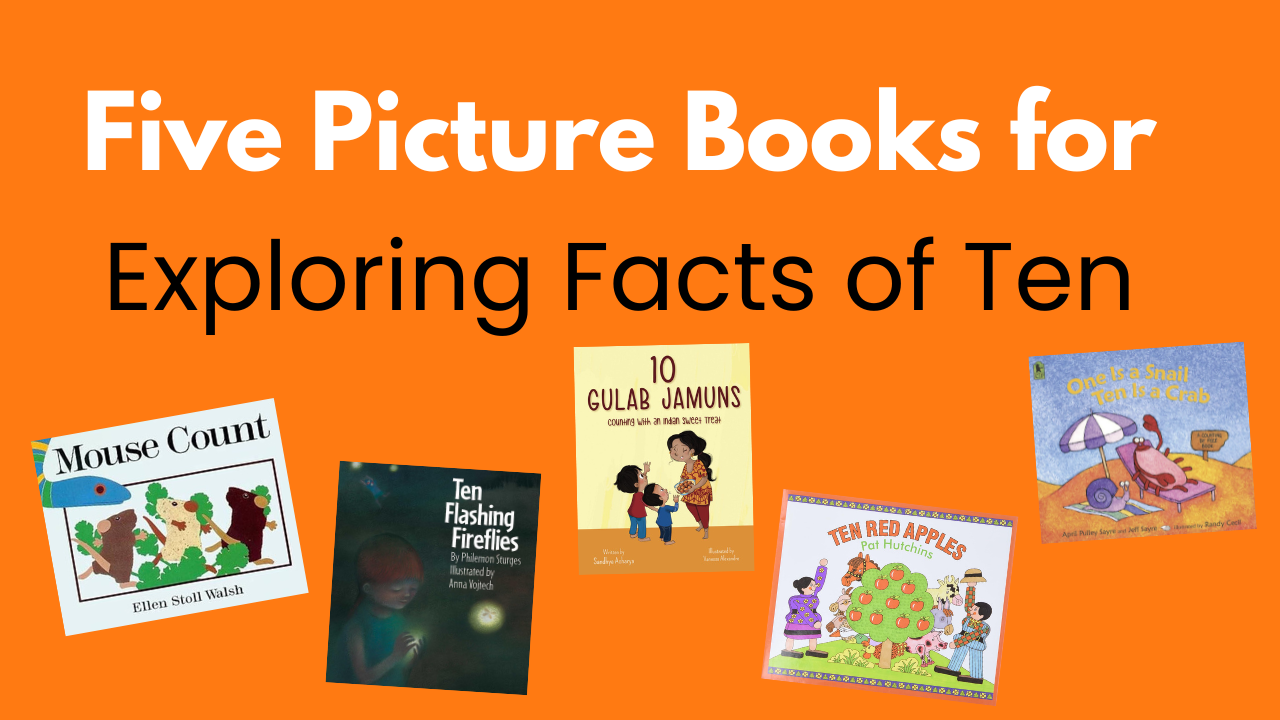
Below are a few of our favorite picture books for addition lessons in K-1, each with questions and activities you can use after the read-aloud. Whether you’re launching an addition unit or just want to make numbers feel a little more magical, these stories are an engaging way to get students thinking mathematically and bring math to life. Look for them in your school library or click on the title links to order from Amazon.
1. Ten Flashing Fireflies by Philemon Sturges
Two children collect fireflies at dusk, watching their jar glow brighter and brighter, until they realize the fireflies' light dims when they're trapped. So they release them, counting down as the fireflies return to the night sky.
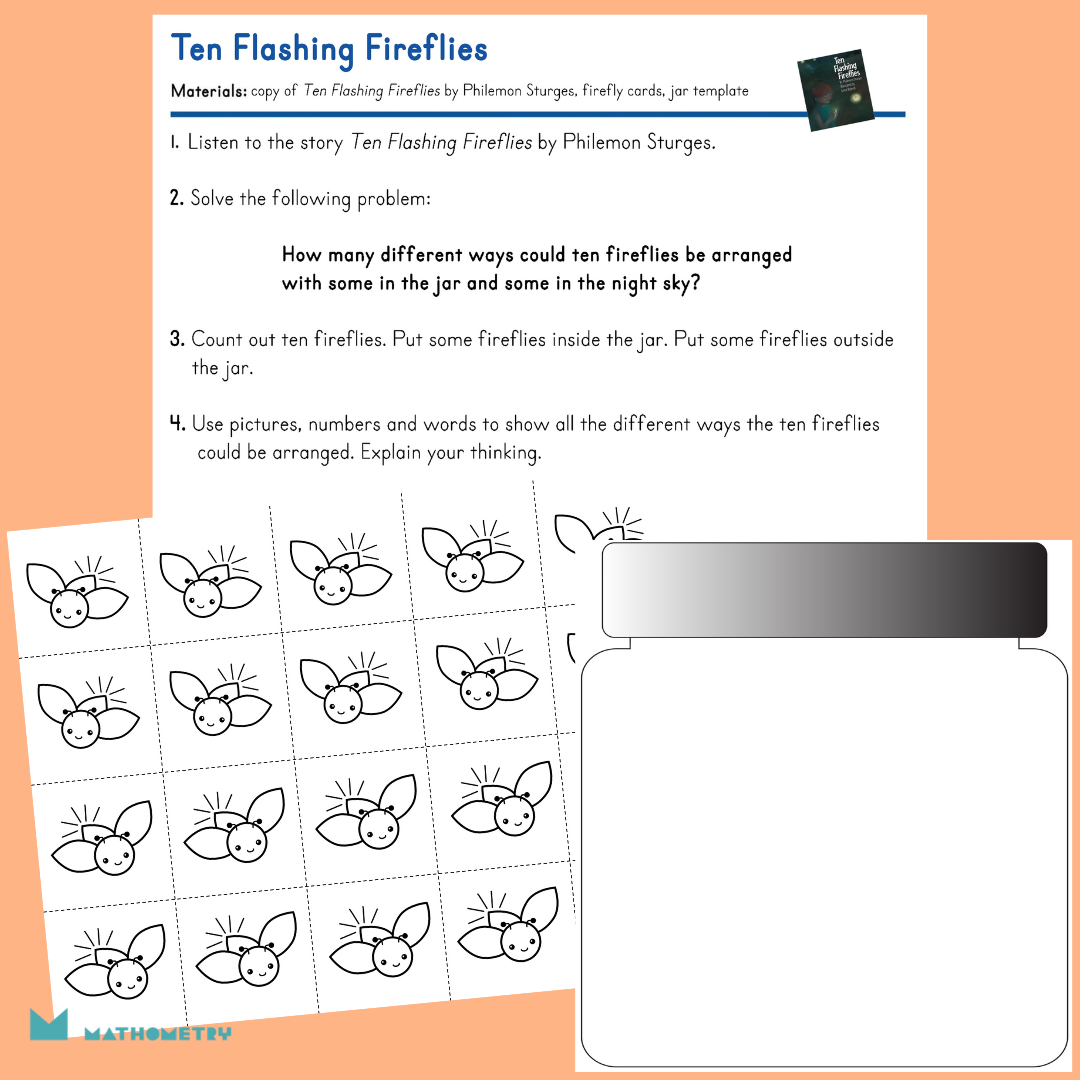
This book's structure makes it perfect for exploring combinations of 10. On every page, some fireflies are in the jar and the rest are still in the sky, and the total never changes. We've paired it with ten frames and firefly cut-outs during small group instruction, and students love modeling how one more in the jar means one less in the sky. It's an ideal springboard into addition and subtraction facts of ten.
Questions to ask
- "There are 4 fireflies in the jar. How many are still flying in the sky? How do you know?"
- "When one more firefly goes into the jar, what happens to the number in the sky?"
- "There are 10 fireflies in all. If 7 are still flying in the sky, how many are in the jar? How do you know?"
- "How many different ways could 10 fireflies be arranged with some in the jar and some in the night sky?"
Try this
- Jar and Fireflies: Partners share a jar and 10 firefly cutouts. Retell the story together, moving one firefly at a time, and record each combination as an equation (3 + 7 = 10).
- Hidden Fireflies: Place some fireflies in a covered "jar" and leave the rest visible. Students figure out how many are hiding, then uncover to check. This is a natural first step toward missing-addend thinking.
2. Mouse Count by Ellen Stoll Walsh
A hungry snake finds ten mice napping and counts them one by one into a jar. But the clever mice convince the snake that one more, bigger mouse would make the meal complete. While the snake slithers off, the mice rock the jar over and "uncount" themselves to freedom.
The counting up and counting back makes this book a natural fit for exploring the relationship between addition and subtraction, and the jar gives students a clear container for one part of ten.
Questions to ask
- "The snake has 6 mice in the jar. How many more does he need to have 10?"
- "When the mice started escaping, how many were left in the jar after 3 got out?"
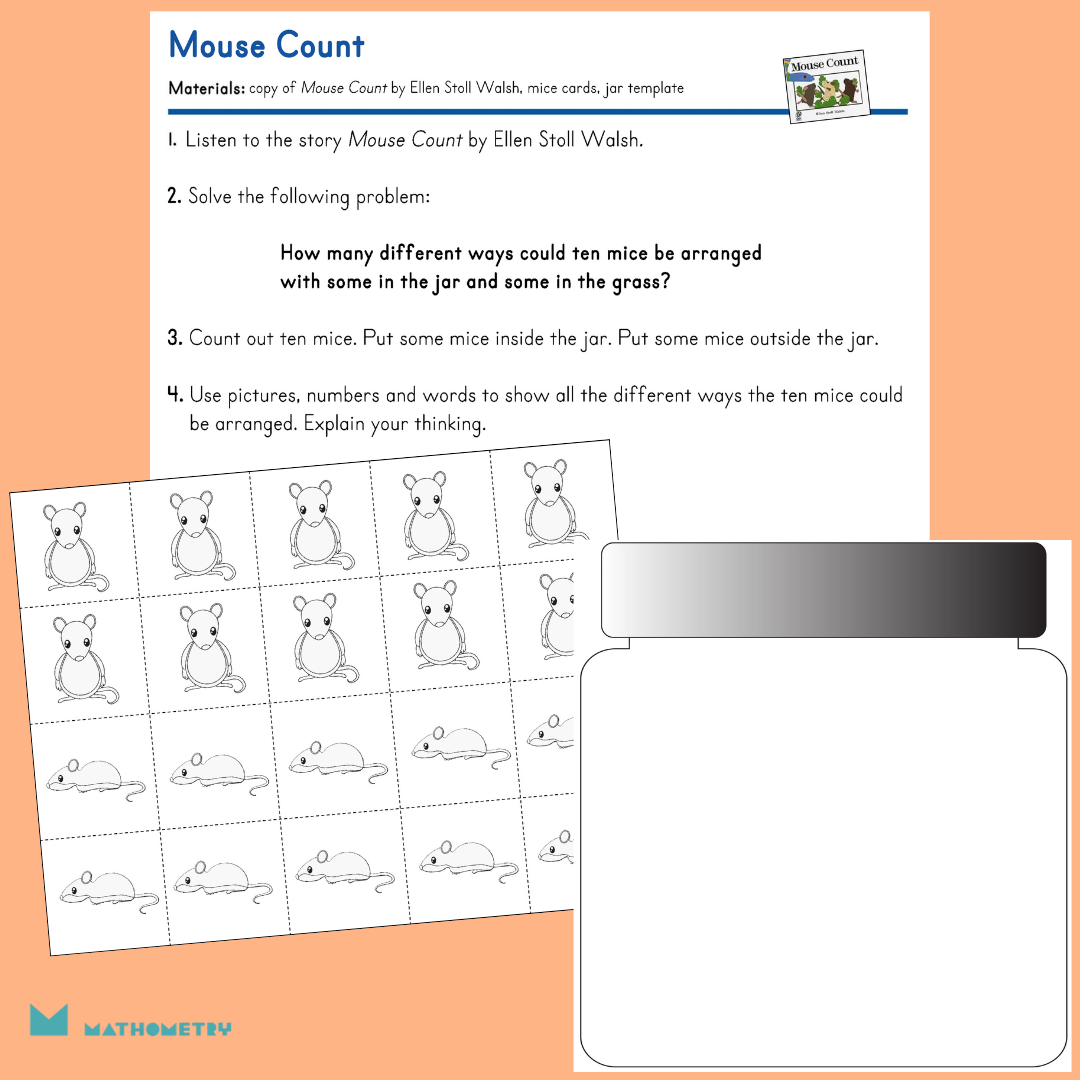
- "How many different ways could the mice be arranged with some in the jar and some in the grass?"
Try this
- Partners share 10 mouse cutouts and a paper jar. One partner (the snake) puts some mice in the jar while the other covers their eyes. The second partner looks at the mice left outside and says how many must be in the jar.
- Count Up, Count Back: On a ten frame, students fill in mice as the snake collects them, then remove them as they escape. Pause at each step and ask students to say the fact both ways: "7 in, 3 out" and "10 take away 3 is 7."
3. 10 Gulab Jamuns by Sandhya Acharya
10 Gulab Jamans brings subtraction from 10 into a warm family story. Brothers Idu and Adu are excited because guests are coming for dinner and Mama is making a special dessert: ten syrup-soaked gulab jamuns. Mama asks them to leave the treats alone until the guests arrive, but can they wait? Rather than scolding the brothers when they eat six of the ten treats, Mama turns the moment into a subtraction lesson: she made 10, so how many are left? Then they help to make a new batch.
Questions to ask
- "Mama made 10 gulab jamuns. Adu ate 3. How many were left?"
- "How many more gulab jamuns would Mama need to make to get back to 10?"
- "If Idu and Adu ate 10 gulab jamuns altogether, how many different ways could they have split them?"
Try this
- Sneaky Snack Subtraction: Place 10 brown pom-poms in a bowl. One student secretly removes some while the class closes their eyes. Students look at what's left and figure out how many were eaten, then explain their thinking.
- Share the Sweets: Partners split 10 gulab jamans (counters) between Idu and Adu in as many ways as they can, recording each way. Encourage students to find a way to be sure they've found them all.
4. Ten Red Apples by Pat Hutchins
Ten red apples hang on the farmer's tree, but they don't last long. In a rhyming, sing-song countdown, a horse, a cow, a donkey, a pig, a hen, and other farm animals each help themselves to an apple, while the farmer pleads with them to save some for him. By the time the ninth animal has eaten, only one apple is left for the farmer and none for his wife, who wants to bake a pie. Then the farmer spots a second tree with ten more apples.
The repetitive text in this book invites students to join in, and the apples are shown both on the tree and lined up above the text beside large numerals, which makes it easy to pause on any page and ask how many have been eaten and how many are still hanging.
Questions to ask
- "Six animals have eaten an apple. How many apples are still on the tree?"
- "How many more animals need to eat before the tree is empty?"
- "The farmer found a new tree with 10 apples. If the farmer and his wife each take some, what are all the ways they could share them?"
Try this
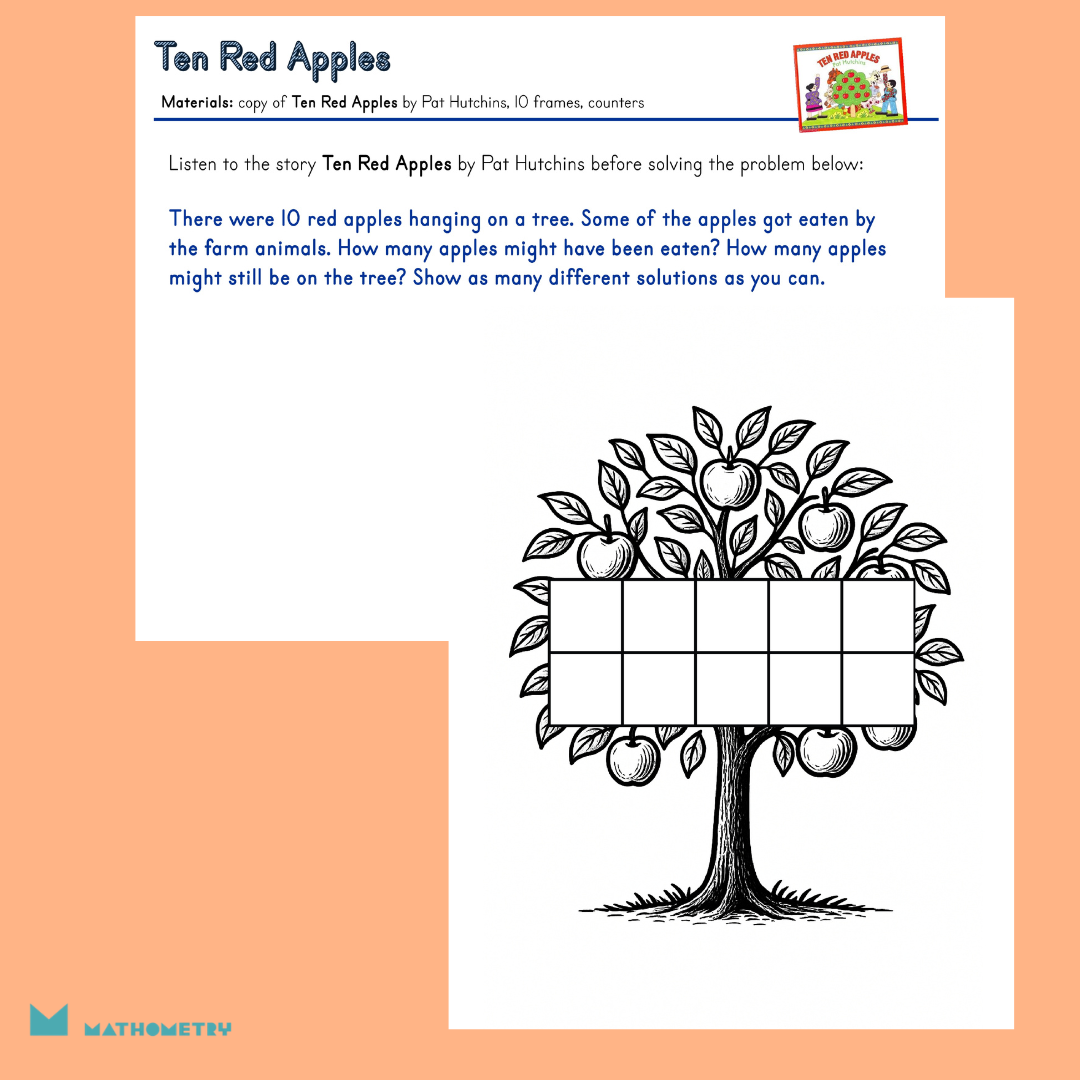
- Apple Tree Ten Frames: Students place 10 red counters on a ten frame "tree." As you reread, they remove one apple at a time and record the equation.
- Who Ate the Apples?: Show a tree with some apples missing and ask students to figure out how many animals have visited. Then flip it: tell them how many animals came, and they work out how many apples remain.
- Have students work in pairs on the following task: There were 10 red apples hanging on a tree. Some of the apples got eaten by the farm animals. How many apples might have been eaten? How many apples might still be on the tree? Show as many different solutions as you can. Circulate and ask, "Can you order your solutions?", "How can you be sure that you have found all possible solutions?"
5. One Is a Snail, Ten Is a Crab by April Pulley Sayre & Jeff Sayre
This counting book uses the number of feet on different creatures: a snail has one foot, a person has two, a dog has four, an insect has six, a spider has eight, and a crab has ten. As the numbers grow, the authors combine creatures to reach each total. It's a fun book for showing students that numbers can be decomposed in many ways, including with more than two parts.
Questions to ask
- "The book says a crab has 10 feet. How many ways can you make 10 feet using two different creatures?"
- "Can you make 10 feet using three different creatures?"
Try this
- Creature Combos: Make a chart showing creatures from the book, each labeled with its number of feet. Students work in partnerships, or triads, to find as many ways as possible to make 10 feet and record them using pictures, words, and equations (8 + 2 = 10; 4 + 4 + 2 = 10).
Tips for Getting the Most Out of Your Read-Alouds
Read it twice. The first reading is for enjoying the story. On the second reading, slow down and focus on the math. A book that becomes a shared reference ("Remember when 3 fireflies were in the jar?") gives students a concrete anchor for abstract facts.
Keep manipulatives nearby. Ten frames, two-color counters, linking cubes, and rekenreks let students model what's happening on the page in real time.
Move from story to strategy. Once students are comfortable with combinations of ten, connect them to games and number talks so the facts become automatic.
Facts of 10 are foundational, but they don't need to be dull. With the right books and a few hands-on follow-ups, your students will be making ten with confidence.
Looking for more math read-alouds for K-1? Check out this post: 10 Counting Books that Build Early Number Sense.