Measurement Conversions: Why Hands-On Beats Worksheets
* This post contains affiliate links. As an Amazon Associate, Mathometry earns a small commission from qualifying purchases. Know that we only link to products that we personally use and recommend.
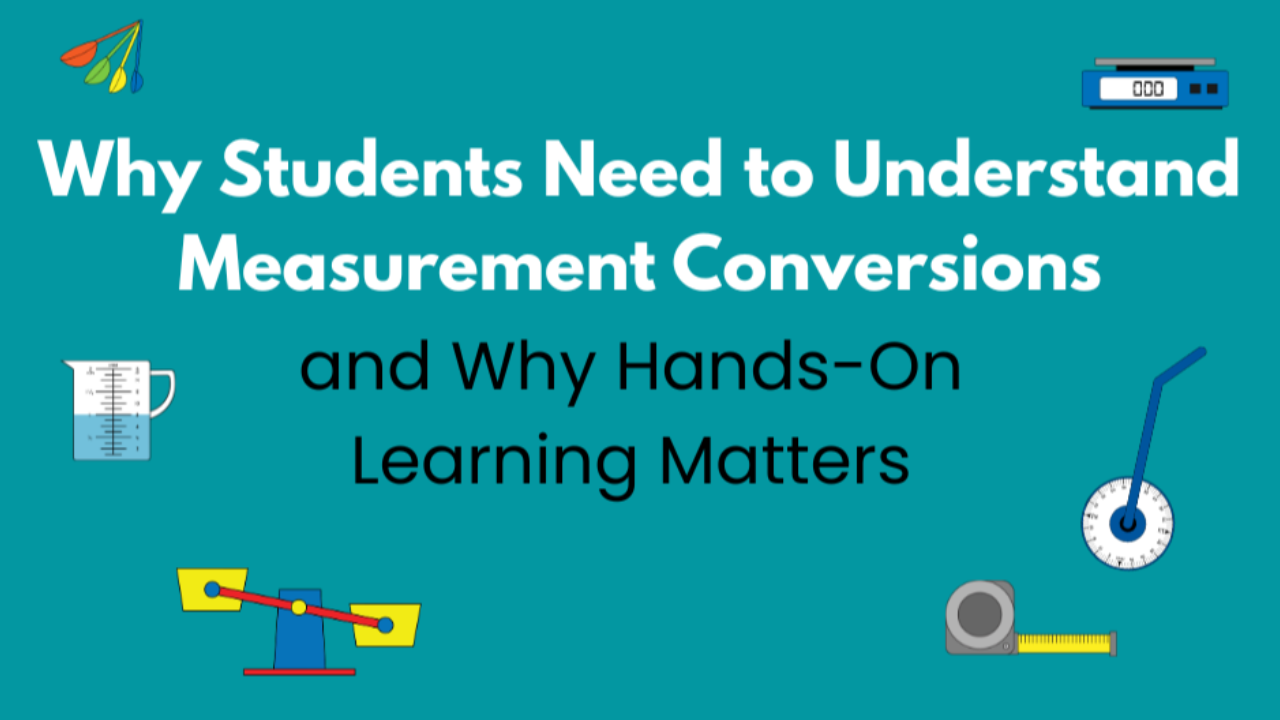
Measurement conversion rules are often taught through workbook pages or worksheets, without students developing a true understanding of what those conversions represent. Helping students understand how and why to convert measurements, both within the metric system and the U.S. customary system, is essential for developing mathematical reasoning and real-world problem solving skills. The most effective way to build this understanding is through hands-on experiences that allow students to physically explore and compare different units.
Why Measurement Conversions Matter
Measurement is woven into everyday life. Whether we are cooking, building, traveling, or conducting scientific experiments, we constantly move between different units.
Students who understand measurement conversions can:
- interpret real-world quantities accurately
- estimate and check whether answers are reasonable
- solve multi-step problems involving length, mass, volume, and time
- apply mathematical reasoning beyond the classroom
Without conceptual understanding, students may perform conversions mechanically but struggle when faced with real situations requiring estimation or decision-making.
Metric Conversions: Understanding the Relationships Between Units
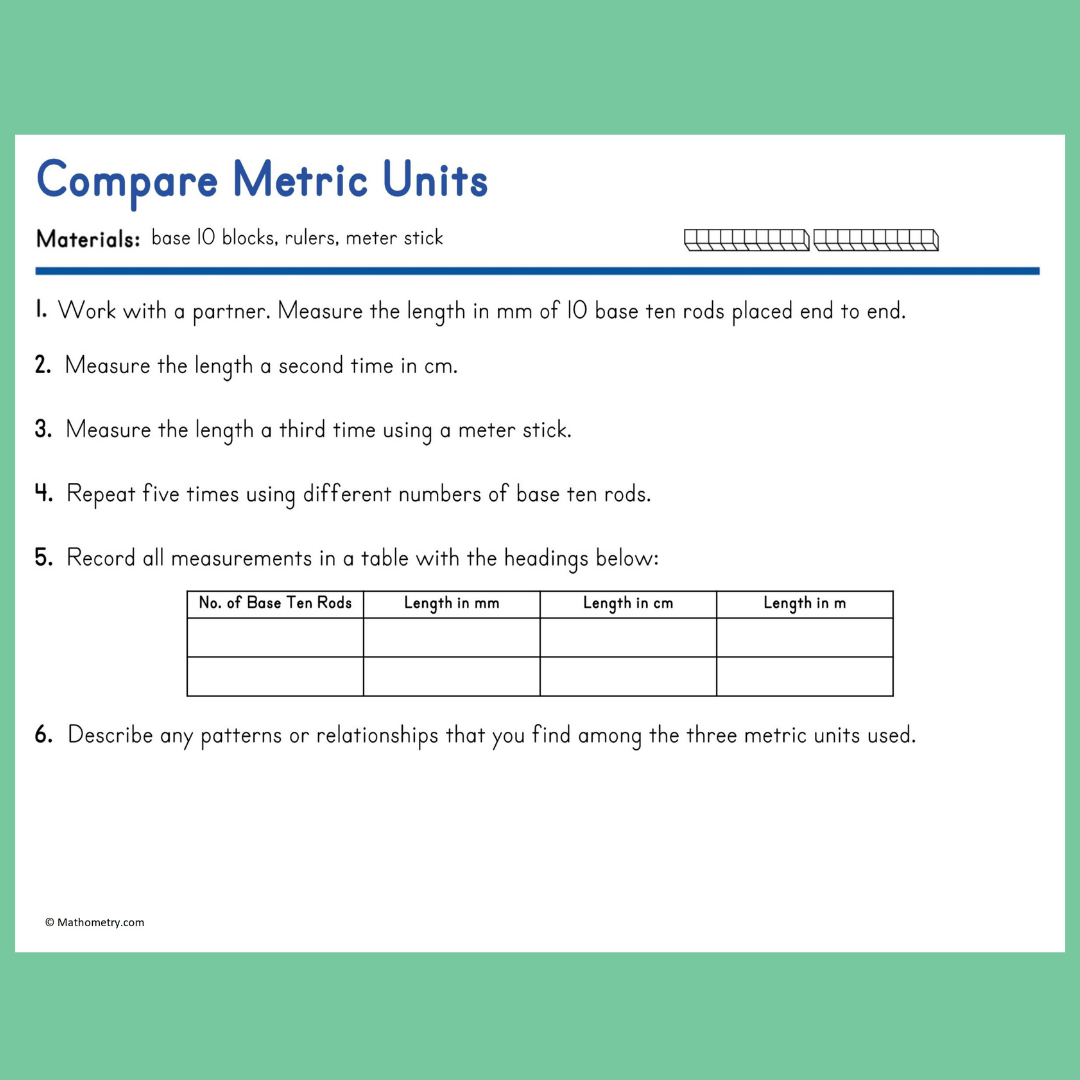
The metric system is structured around powers of ten, which makes it relatively straightforward to convert between units (e.g. 10 millimeters = 1 centimeter, 100 centimeters = 1 meter, 1000 meters = 1 kilometer). Students often learn shortcuts such as shifting the decimal point when converting metric units. While this may appear to be an efficient procedure, students need to understand why the numbers change. Hands-on measurement helps students visualize these relationships — for example, seeing that a meter stick contains 100 centimeters.
U.S. Customary Conversions
Unlike the metric system, the U.S. customary system does not follow a base-10 structure. This makes it more complex for students because conversions involve a variety of ratios that must be understood and remembered. Common conversions students encounter include:
- 12 inches = 1 foot
- 3 feet = 1 yard
- 1760 yards = 1 mile
- 16 ounces = 1 pound
- 8 fluid ounces = 1 cup
- 2 cups = 1 pint
- 2 pints = 1 quart
- 4 quarts = 1 gallon
Because these relationships are less predictable than metric conversions, students benefit even more from hands-on exploration using real objects such as measuring cups, beakers, rulers, tape measures, and scales.
Why Worksheets are Not Enough
Worksheets typically focus on procedural practice:
- Convert 4.6 m to cm
- Convert 3 quarts to cups
- Convert 2.5 kg to g
Students may successfully complete problems but still lack a sense of the quantities involved. For instance, a student might correctly convert meters to centimeters but be unable to estimate whether a classroom door is closer to 2 meters or 20 meters tall.
When students rely solely on memorized rules, they also struggle to detect errors. A student who understands measurement conceptually would recognize that converting meters to centimeters should produce a larger number because centimeters are smaller units.
Hands-on experiences help students build this understanding.
The Value of Hands-On Measurement Experiences
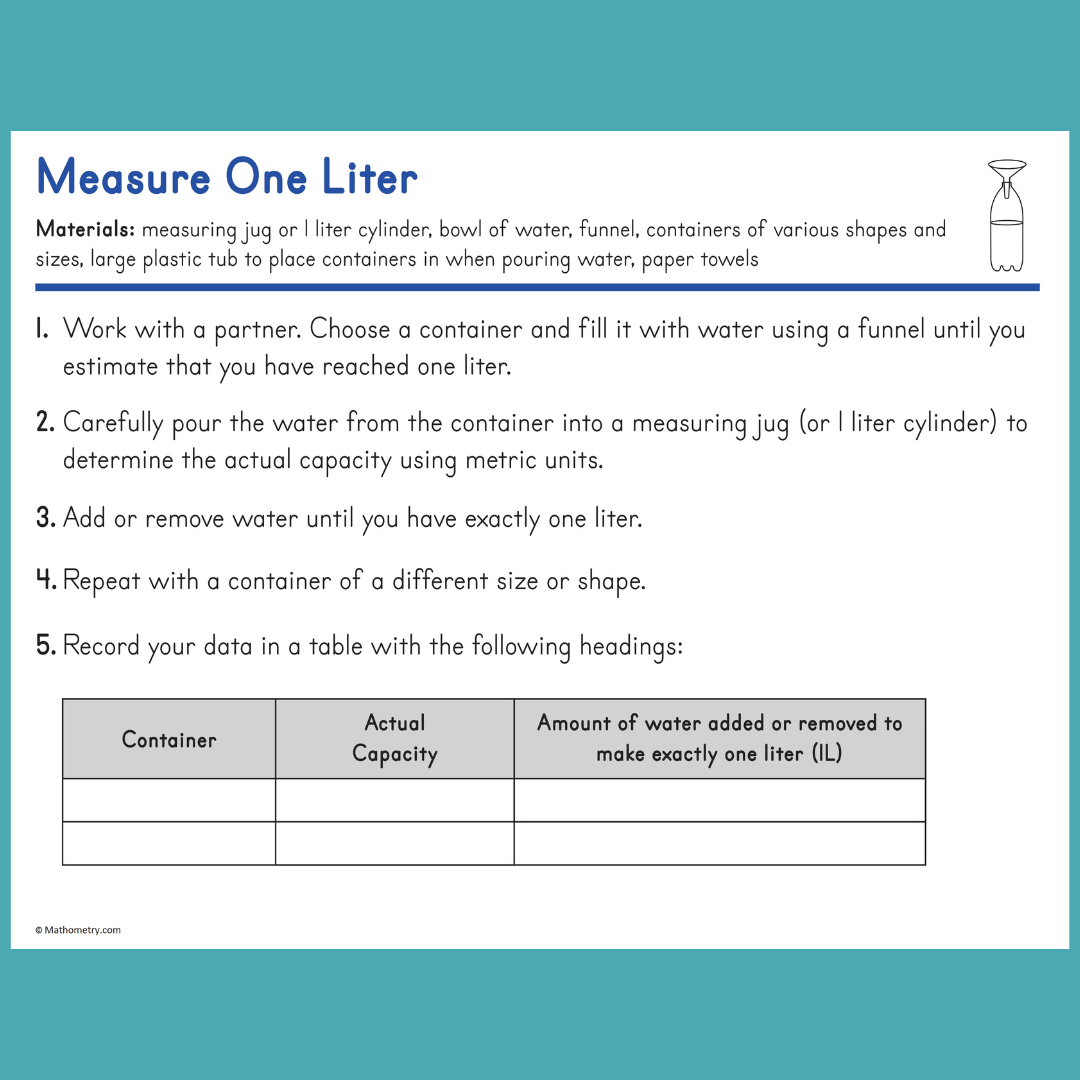
When students physically measure, pour, weigh, and compare quantities, they begin to build mental benchmarks for different units.
Classroom experiences can include:
- students measuring classroom objects using both metric and customary units. For example, they might measure a desk using centimeters and inches, then compare the results.
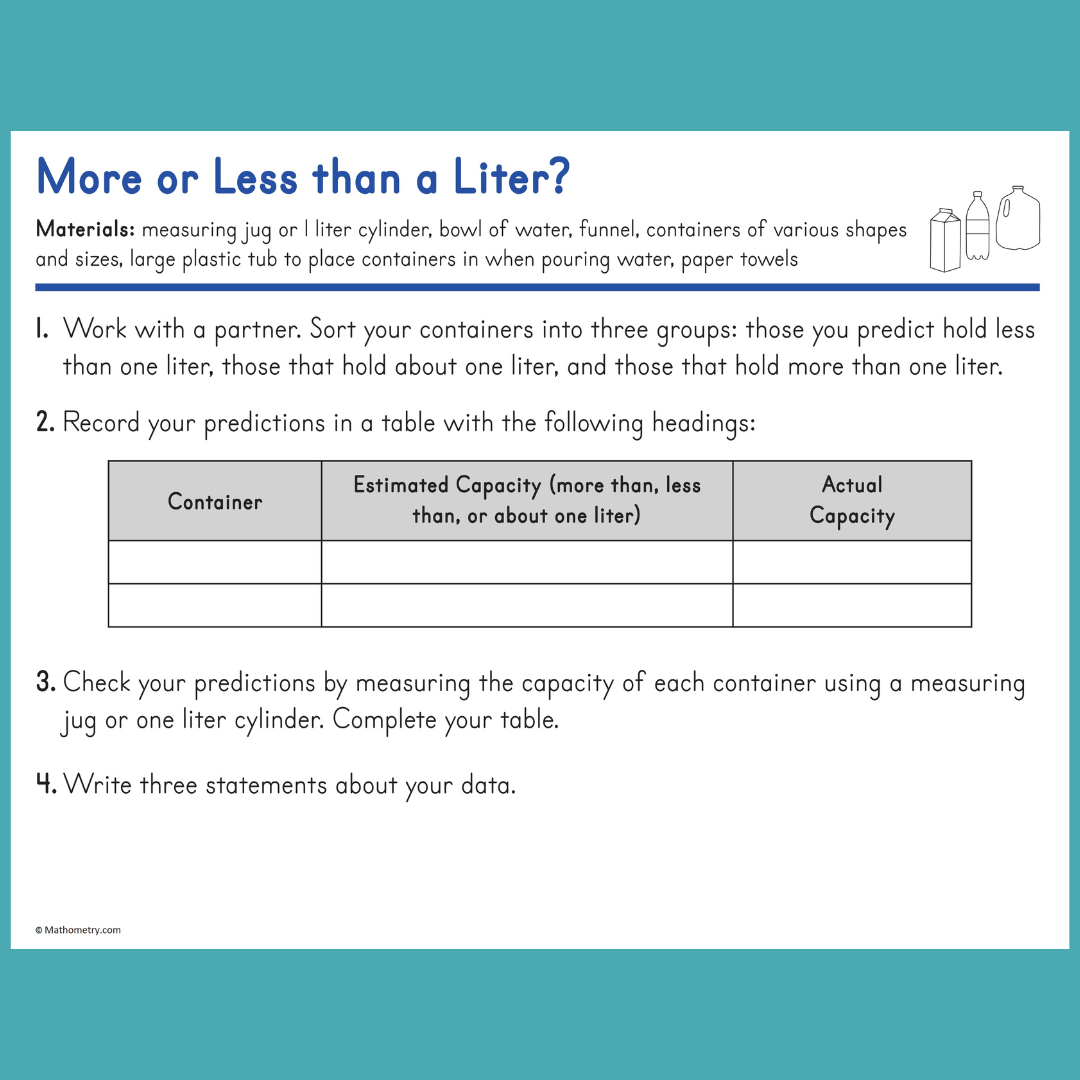
- using measuring cups, beakers and different sized containers to explore relationships between cups, pints, quarts, and gallons. Pick a warm day and head outside for this one!
- measuring the perimeter of a basketball court or playground using a trundle wheel to develop a sense of different metric lengths and converting the measurements to different metric units
- creating unit benchmarks by estimating and then measuring objects that are approximately: 1 meter long, 1 kilogram in mass, 1 liter capacity
These benchmarks help students develop a mental reference point that supports estimation and conversion.
Helping Students Build Real Understanding
When students engage with measurement through meaningful experiences, they begin to develop:
- a sense of scale for different units
- an understanding of how units relate to one another
- the ability to estimate and check answers
- confidence applying measurement in real contexts
The goal of teaching measurement conversions isn't just for students to follow a procedure — it's to help them understand quantities and the relationships between them in ways that support real-world reasoning.
Hands-on explorations, discussion, and meaningful problem solving build this understanding far more effectively than worksheets alone. If we want students to truly develop this kind of understanding, they need regular opportunities to measure, pour, weigh, and compare quantities.
Resources
Head to your grade level's Measurement and Data section in the All Access Math Hub for hands-on measurement activities to use in your classroom tomorrow.
Not yet a member? Click the button below to download a variety of SAMPLE RESOURCES from the Hub.